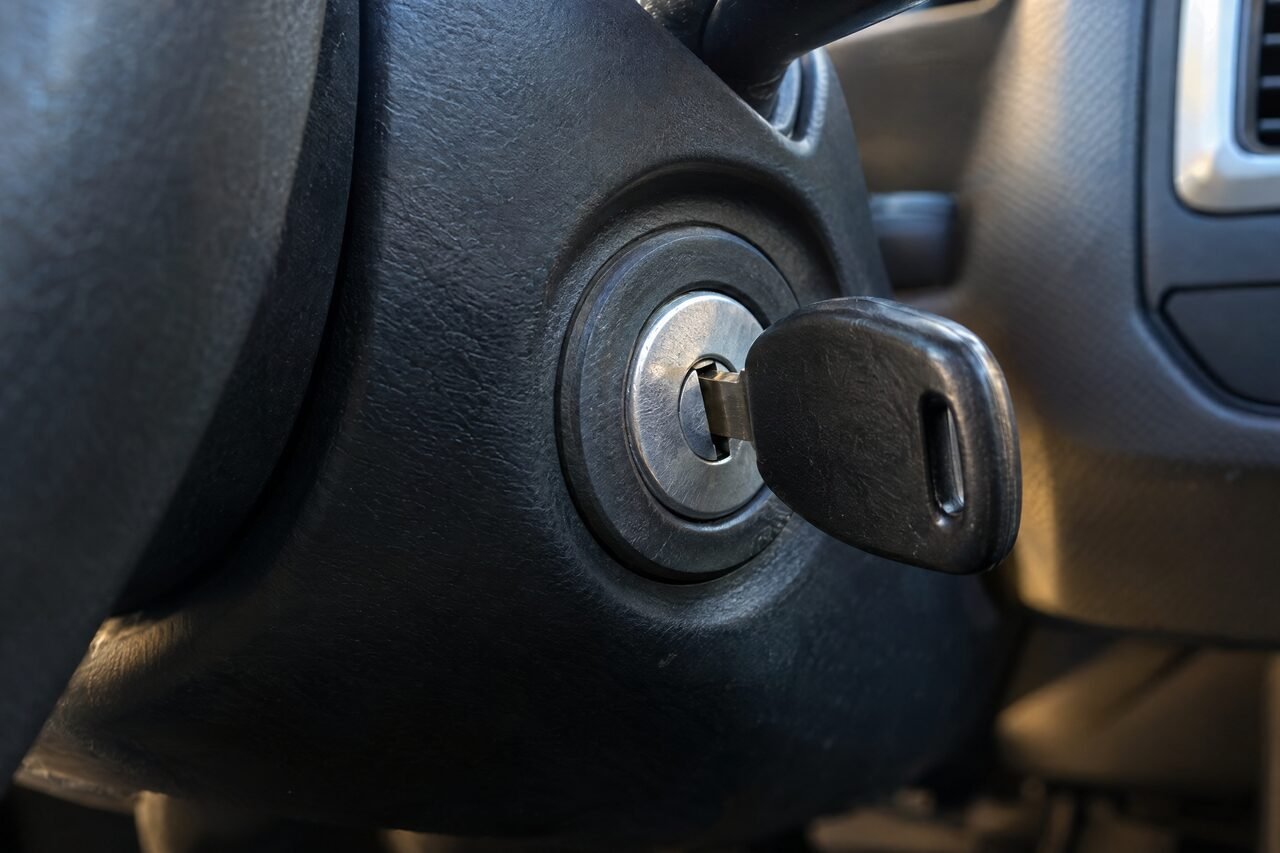
Key broke off in the ignition?
It happens most often with a worn or cracked key, or a key forced against an ignition that has become stiff. What you do in the next few minutes can keep the job simpler:
- Stop turning. Leave the ignition where it is. Turning or pushing on the broken piece can drive it deeper.
- Don’t dig at it. Glue, tweezers, picks or a screwdriver can push the piece further in or damage the cylinder.
- Keep both pieces. The part you’re holding, with the key head and any chip or remote, helps identify your key.
- Call or request a quote with your year, make and model, and tell us how much of the blade is still inside, if you can see it.
We don’t replace the ignition just because a key broke. Depending on the situation, removing the broken piece may be all that’s needed.
Two possible fixes
From the driver’s seat, a broken key and a worn-out ignition can feel like the same problem. They’re different jobs, and which one makes sense depends on what we find.
What decides which fix you need
- Your vehicle. Ignition designs differ by year, make and model, and that affects what’s possible.
- How deep the piece sits. A piece near the face of the keyway is a different job from one lodged deep inside.
- The condition of the cylinder. A worn or damaged cylinder may keep causing trouble even after the piece is out.
- Your preference. When more than one option would work, you choose.
We look at the ignition and the broken key first, then explain the options so you can decide.
About the ignition lock cylinder
The ignition lock cylinder is the mechanical part your key slides into and turns. Inside are small spring-loaded wafers that line up with the cuts on your key. Over years of use, the key and the cylinder wear against each other.
Signs the cylinder may be wearing out:
- The key is getting harder to turn, or only turns after some jiggling
- The key sticks going in or coming out
- The key feels loose or gritty as it turns
These signs point toward the cylinder, but they aren’t a diagnosis on their own. A badly worn key can cause the same symptoms, which is why we look before recommending a replacement. If the key itself is the problem, see car key replacement.
Key stuck or won’t turn?
Try these gently first. Don’t force the key: a bent or snapped key makes the job bigger.
- Turn the steering wheel slightly while turning the key. If the steering lock is engaged, a little pressure on the wheel in either direction often frees it.
- Check the gear selector. Many automatic cars won’t release the key unless the car is fully in Park.
- Look at the key. A bent, cracked or badly worn blade may not line up inside the cylinder.
- Try your spare key, if you have one. If the spare turns smoothly, the problem is more likely the key than the ignition.
Mechanical or electrical?
Our work here is mechanical: the key, the ignition lock cylinder, and broken keys stuck inside it. Some symptoms usually point somewhere else:
- The key turns, but the engine doesn’t crank, or the dash stays dark. This often points to the battery, the starter or the electrical side of the ignition.
- The key only comes out after the battery is disconnected. That often points to an electrical fault too.
- The engine cranks but won’t start, sometimes with a flashing key or security light. That can point to the key’s transponder chip. See car key replacement.
The electrical ignition switch isn’t part of this service. If your symptoms sound electrical, a mechanic or auto electrician is usually the right first call.
Push-to-start car?
Cars that start with a button don’t have an ignition lock cylinder for the key. If a push-to-start car won’t recognize its key, see key fobs and smart keys.
What to tell us
A few details help us understand the situation before we look at the car:
- Your vehicle’s year, make and model
- What happened: the key broke, it’s stuck, or it won’t turn
- Whether part of the key is still inside, and roughly how much of the blade is missing
- Whether the key had been getting hard to turn before
- Where the car is parked in Kirkland
Expect to show a photo ID and a document that ties you to the vehicle, such as the registration or title.
How to request an assessment and quote
- Call, or send a quote request with your year, make and model and what happened.
- We talk through the situation and what each option may involve for your vehicle.
- We look at the ignition and the broken key, then explain your options.
- You decide how to go ahead.
Once it’s sorted, consider a spare key, so one worn key isn’t the only one you have.