When a replacement makes sense
Most people call about a new key for one of a few reasons:
- The key is worn. The blade has rounded edges and you have to jiggle it to turn the lock or ignition.
- The key is broken. A cracked head, a snapped blade or a remote shell that’s falling apart. If part of it is stuck in the ignition, start with broken key in the ignition.
- The key stopped starting the car. It turns, but the car won’t start, which can point to the chip inside the key.
- You only have one. You bought a used car with a single key, or the second one went missing.
If you still have a working key, you’re in the simplest position. If you have none at all, start with our guide to lost car keys.
What kind of key does your car use?
The type of key matters more than anything else, because it decides what the new key needs.
Transponder key
A plastic head with no buttons and a metal blade. Inside the head is a small chip that talks to the car. The blade opens the door, but the chip is what lets the engine start, so a new key has to be cut and programmed.
Flip key or remote head key
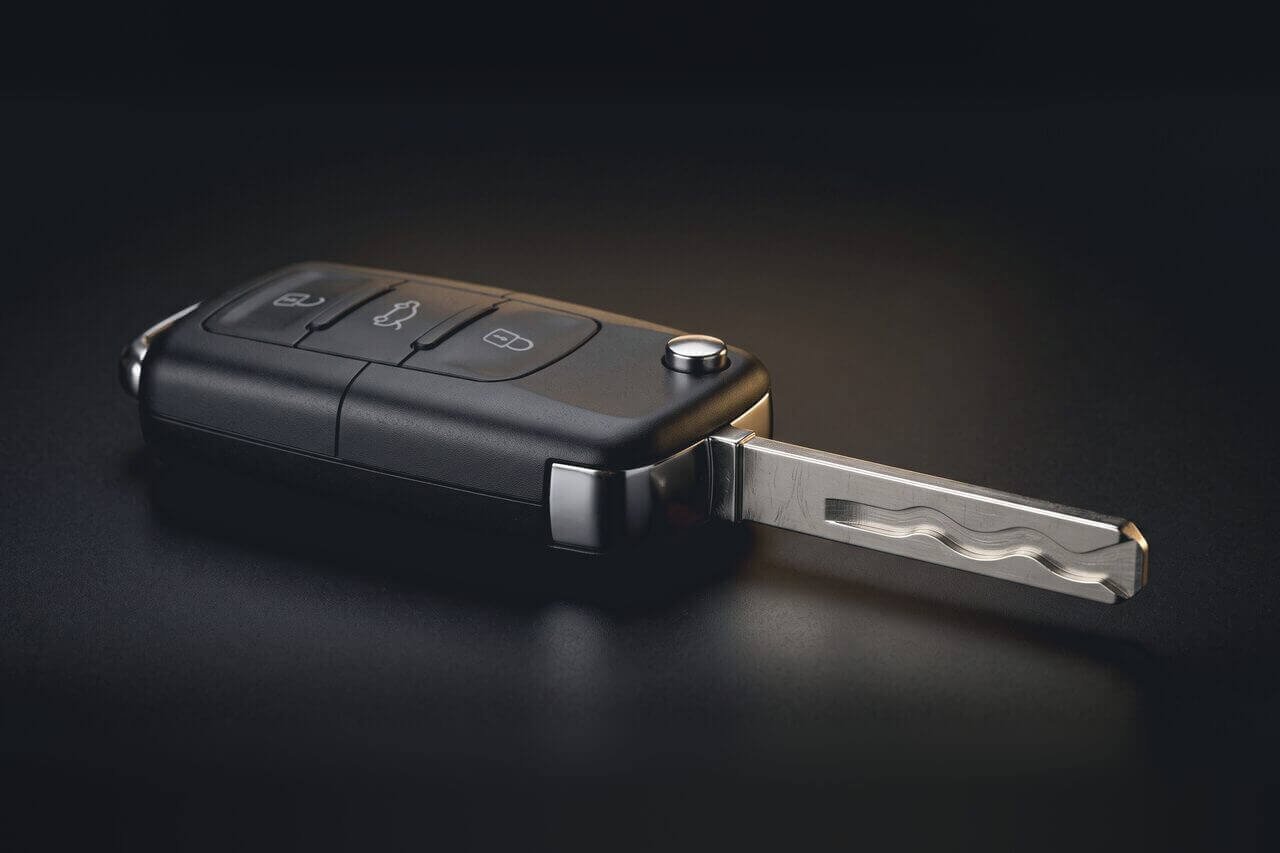
Lock and unlock buttons on the head, with a blade that folds out or stays fixed. These combine a remote and a transponder in one piece. See key fobs and smart keys for more.
Smart key
No blade showing, and the car starts with a button while the key stays in your pocket. Most still hide a small emergency blade inside.
Laser-cut or edge-cut blade
Look at the blade. An edge-cut blade has notches along its edges, like a house key. A laser-cut (sometimes called sidewinder) blade has a wavy groove milled into its flat sides. Telling us which one you have makes the first conversation faster.
What happens after you call
- Tell us your year, make and model and what kind of key you have.
- We go over what your key needs and the options for your vehicle.
- If you decide to go ahead, we come to your car, wherever it’s parked in Kirkland.
Keep any old or broken key. Even a damaged key can help identify the right replacement.